Does Soreness Mean Muscle Growth? The Truth
Jules Medina · 11/11/2026
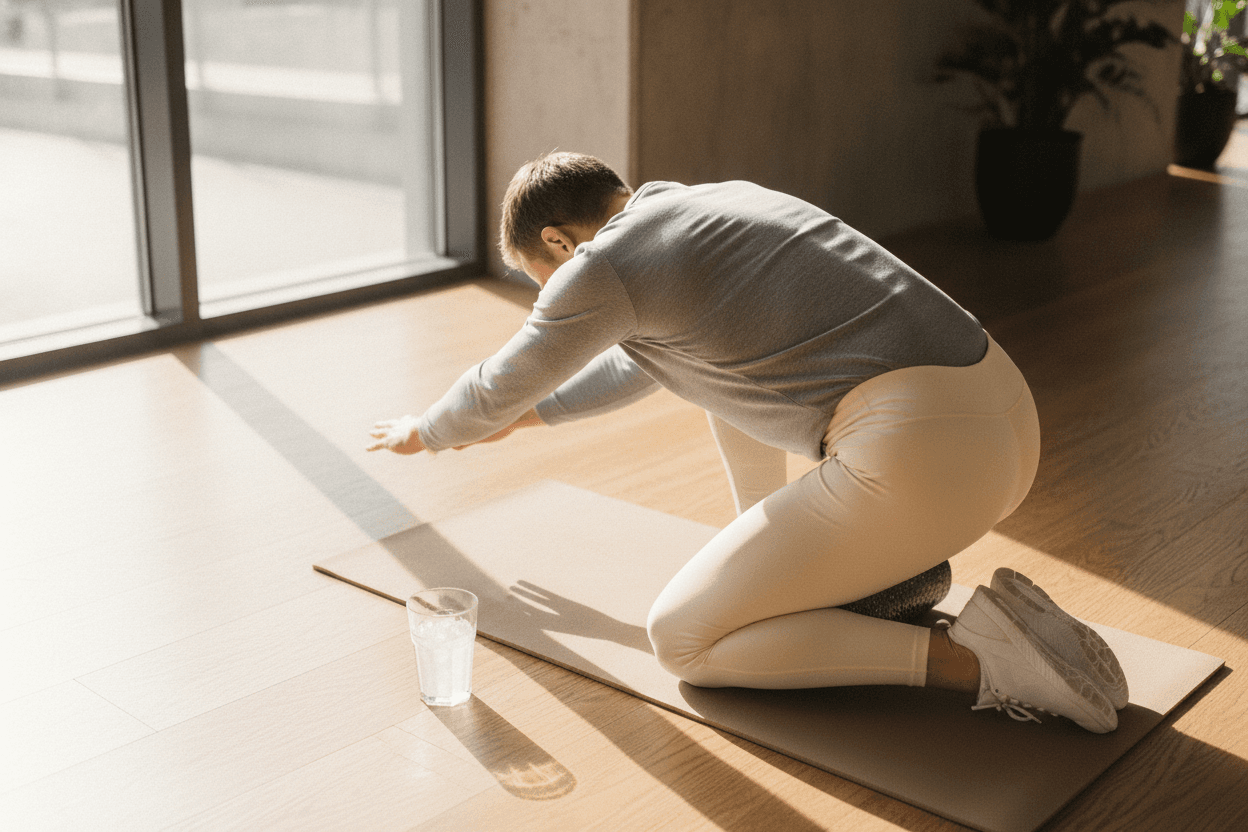
What Muscle Soreness After Workout Actually Means
Years ago I finished a leg session so brutal I could barely walk down the stairs the next morning. My first thought? That had to be an amazing workout for growth. Real talk though, that is not how it works. As a HIIT and spin instructor here in Tampa Bay, I get asked whether soreness means muscle growth all the time, from the 22 year olds to the 65 year olds in my classes.
The fitness world loves to glorify that burn and the ache that follows. The latest studies tell a different story. So let me walk you through what soreness actually indicates, the science from the last couple of years, and some practical ways to reduce muscle soreness so you can train more consistently. We will also tie it into how athlete recovery can look when you pick better options for your post workout wind down.
Some of my favorite conversations happen after class while we are all stretching on the mats. That is when people open up about their routines. A ton of them still believe heavy soreness equals progress. Once you see what the data says, it changes how you train and how you recover. It also makes the social side of fitness a lot easier to keep up. For more on that approach see our science behind functional recovery seltzers.
What Muscle Soreness After Workout Actually Means
Ever rolled out of bed two days after a new workout and felt like your muscles were yelling at you in protest? That feeling is delayed onset muscle soreness, or DOMS. It usually hits 24 to 72 hours later. NASM explains that DOMS shows up 24 to 72 hours after unfamiliar exercise and does not measure workout quality or progress.
A 2026 fitness research summary of Schoenfeld and Contreras showed DOMS is a poor proxy for muscle growth, because it tracks with novelty, not hypertrophy. Your body is just reacting to something it has not done before. Once you repeat the movement the soreness often fades. That does not mean your gains stopped. It means your body adapted.
This is where the repeated bout effect comes in. Your muscles get better at handling the same stress. Soreness drops, but you can still push harder by adding weight or reps. Chasing that first-day ache every single session can actually tip you into overtraining. It pulls you away from the real work that builds strength over months.
Know your tolerance? The 10mg collection carries a fuller dose of Delta-9 THC and CBG.
Browse 10mg THC DrinksI see this play out in my classes constantly. New members show up and feel wrecked for a week. The regulars next to them? Totally fine. The difference is not that the regulars are coasting. They have simply adapted. Their programs lean on progressive overload instead of constant novelty.
The Latest Science on Soreness and Muscle Growth
Set for Set breaks down how, according to Behringer et al. 2025 and Damas et al. 2016, muscle damage and hypertrophy have minimal correlation. Mechanical tension is the real driver. That comes from lifting challenging weights through a full range of motion with control. Damage is just a side effect, and it tends to decrease as you get fitter.
Lyfta fitness review points out that the Schoenfeld narrative review treats damage as a companion to training, not a required growth signal, going by post-2020 evidence. The 2025 Springer meta-regression found hypertrophy was related to protein synthesis only after muscle damage attenuation, per the referenced Damas study. In plain terms, once the damage calms down your body can actually point more resources toward building new muscle.
The 2026 KSEP journal notes that Damas et al. determined hypertrophy only occurs when muscle damage is reduced. This lines up with what I have noticed coaching. The clients who make the steadiest progress are the ones who train consistently without getting destroyed every session. They sleep well. They manage stress. They recover actively instead of just waiting for the soreness to disappear.
This is why I love connecting it to wearable data. A lot of people in my community track HRV or sleep scores. The morning-after comparisons show clear differences when you pick drinks that support relaxation without the downsides of alcohol. It is not about one magic product. It is about stacking habits that let you show up ready to train again. Start with the 5mg THC collection for athletes if you are exploring these options.
Practical Ways for How to Reduce Muscle Soreness and Train Better
So your crew wants to grab drinks after that long run, but your legs are screaming from muscle soreness after workout. You want to stay social. You also want to wake up without regrets. Can you do both? Mostly, yeah, if you make a few smart choices.
Start with the basics. Gentle movement the next day helps a lot. A light bike ride or a walk gets blood flowing without piling on more stress. Solid protein around your workouts gives your body what it needs to repair. And sleep is still king. Most of the real repair happens overnight.
When people ask me how to relieve muscle soreness, supplements and drinks come up fast. Our science behind functional recovery seltzers shows how a balanced stack fits into an active lifestyle. Electrolytes support hydration. Adaptogens help with daily stress. Low dose hemp-derived options bring that relaxed feeling so you can socialize without alcohol.
If you are just getting started, the 5mg THC collection for athletes is a gentle entry point. If you train most days, the 10mg options for regular users might feel more your speed. Either way the nano-emulsion means you notice it within 15 to 20 minutes. No sugar spikes. No next day fog. I will be honest though, it is not going to erase a brutal leg day on its own.
After a tough session I usually reach for the bright orange seltzer with electrolytes. It fits the post-class hang without derailing my morning metrics. Check the frequently asked questions about hemp if you are curious about legality or dosing. Everything we make has third party lab results online, so you know exactly what is in each can.
You can grab the full lineup of recovery seltzers on our site or at local stores with these drinks. The key is using them as part of a bigger plan. Pair them with consistent training. Track how you feel. Adjust as you go. The tart lime flavor for recovery is another favorite when I want something crisp after spin class.
Common Myths About Soreness and Progress
Is soreness really proof you crushed it? Let me clear up a few things that still float around every gym.
The No Pain No Gain Trap
This one is stubborn. Plenty of effective workouts leave you only mildly sore, or not sore at all. Once your body adapts, the soreness signal quiets down. That is normal. It does not mean you are slacking. Lyfta fitness review and the other papers we covered all point the same direction. Focus on tension and progression instead.
Training Through Extreme Soreness Is Smart
Real talk, it is usually the opposite. If you can barely walk, you probably need more rest or some lighter technique work. Pushing through wrecks your form and drags out the setback. Better to dial it back and come back stronger.
Supplements Alone Will Erase Soreness
Nothing replaces sleep, food, and smart programming. The right functional drink can help with how to reduce muscle soreness by supporting hydration and relaxation. But it works best alongside the fundamentals, not instead of them.
See other posts about athlete recovery on our blog for more angles on this. The conversation keeps evolving, and so should our training.
Time to Train Smarter Not Sorer
The evidence is pretty clear at this point. Does soreness mean muscle growth? Not reliably. It can be a sign of new stress, but it is not the goal. Mechanical tension, progressive overload, and consistent recovery drive the real changes you are after.
Next time you feel that deep ache after leg day, ask yourself what it is actually telling you. Maybe it is time to tweak your program. Maybe it is a nudge to prioritize sleep and hydration even more. Either way, give yourself permission to enjoy the social side of fitness without hangovers or crashes.
I have watched too many people at the studios burn out from chasing constant soreness. The ones who last are the ones who recover intelligently and keep showing up month after month. That is the real flex.
Try tracking your own metrics for a few weeks. Compare the nights you wind down with alcohol against the nights you choose a better option. The difference usually shows up in how you feel and how you perform. It might just change how you think about recovery for good.
Ready to make recovery part of the routine? Browse 10mg THC Drinks or compare the full THC seltzer lineup.
References
- Strength Training Routines for Beginners — https://www.nasm.org/resource-center/blog/training/strength-training-routines-beginners
- DOMS: What Causes Muscle Soreness and How Long It Lasts — https://getfitcraft.com/science/delayed-onset-muscle-soreness
- What Causes Muscle Growth? Here Are The Real Mechanisms — https://www.setforset.com/blogs/news/real-mechanisms-of-muscle-growth
- Muscle Soreness Hypertrophy: Does DOMS Mean Growth? — https://www.lyfta.app/articles/muscle-soreness-hypertrophy
- The Resistance Training Dose Response: Meta-Regressions Exploring the Effects of Weekly Volume and Frequency on Muscle Hypertrophy and Strength Gains — https://link.springer.com/article/10.1007/s40279-025-02344-w
- The Repair Tax of Resistance Training: Microdamage Control as a Driver of Adaptation — https://www.ksep-es.org/journal/view.php?viewtype=pubreader&number=1181
Responsible Use Note: Last Rep contains hemp-derived Delta-9 THC. Consume responsibly, start low, and check local laws. Not for use if under 21, pregnant, or operating machinery. Consult a healthcare professional for personalized advice.